
Get a counted thumbs down back
The public dislike count is gone. Emojery counts a thumbs down again, as one emoji in a full palette.
The public dislike count is gone. Emojery counts a thumbs down again, as one emoji in a full palette.
A video can be funny, moving, wrong, or worrying, and the single Like flattens all of that. Pick the emoji that matches what you actually felt.
Like still does what YouTube built it for. The emoji covers everything Like was never going to say.
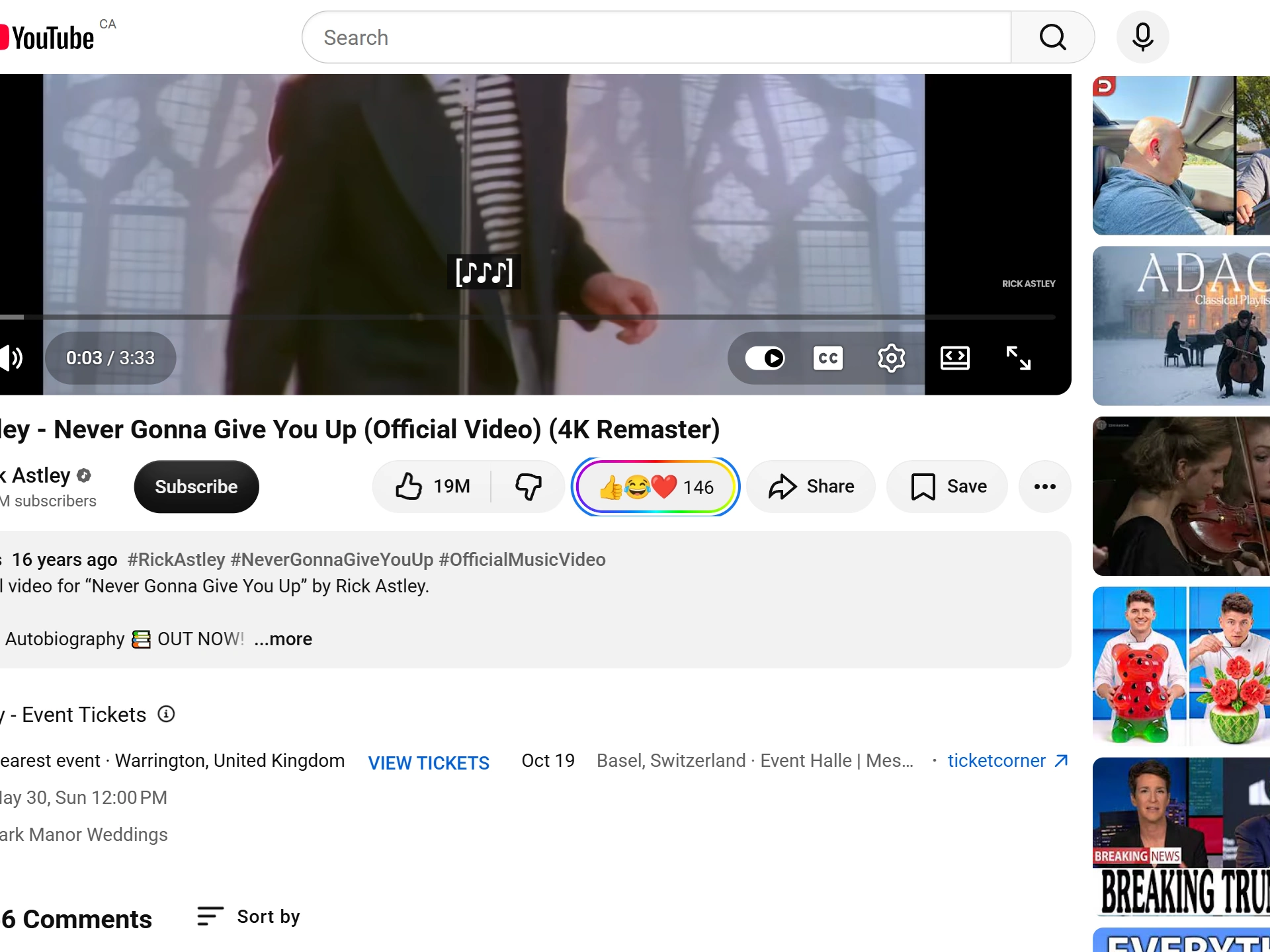
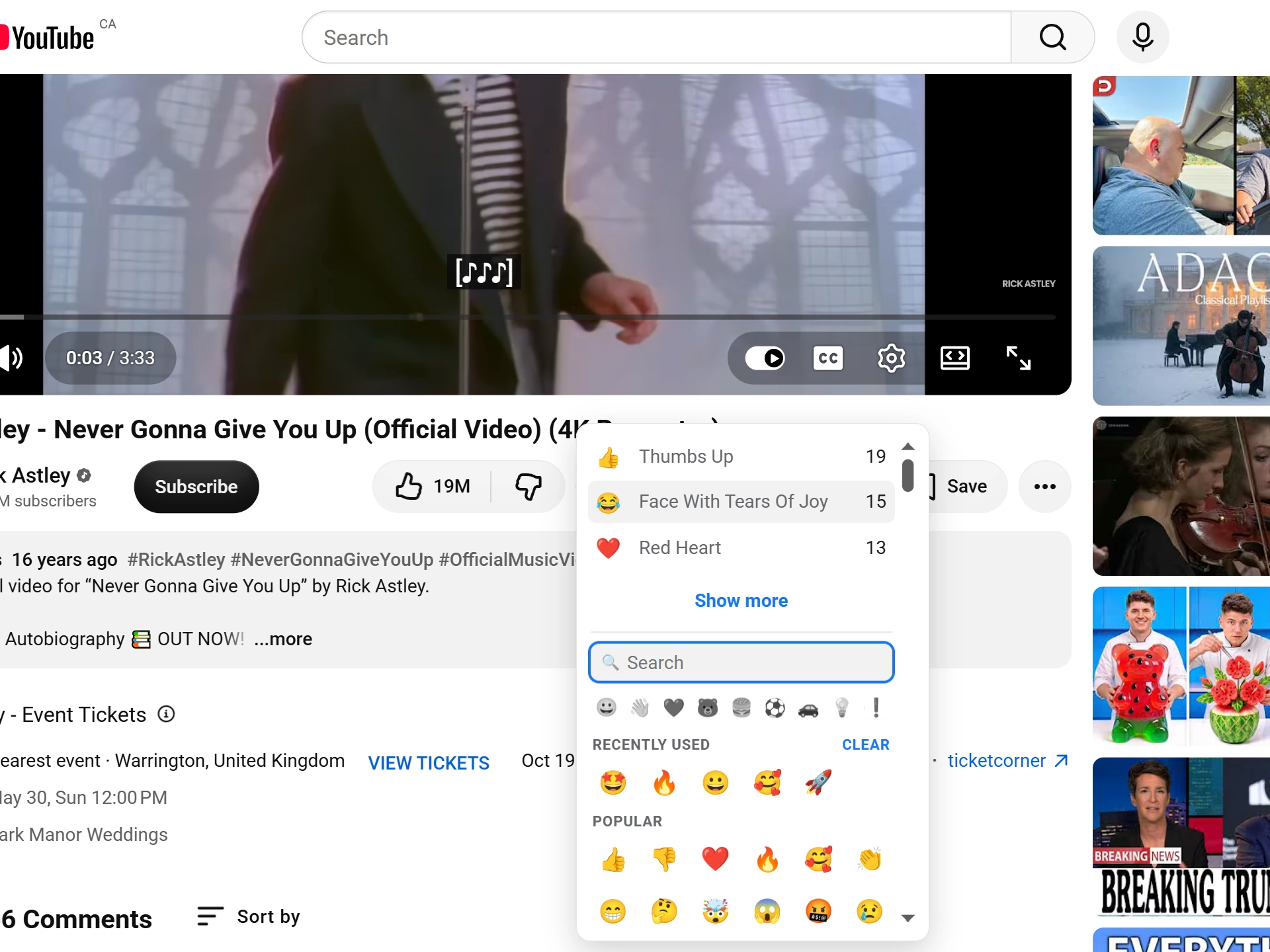
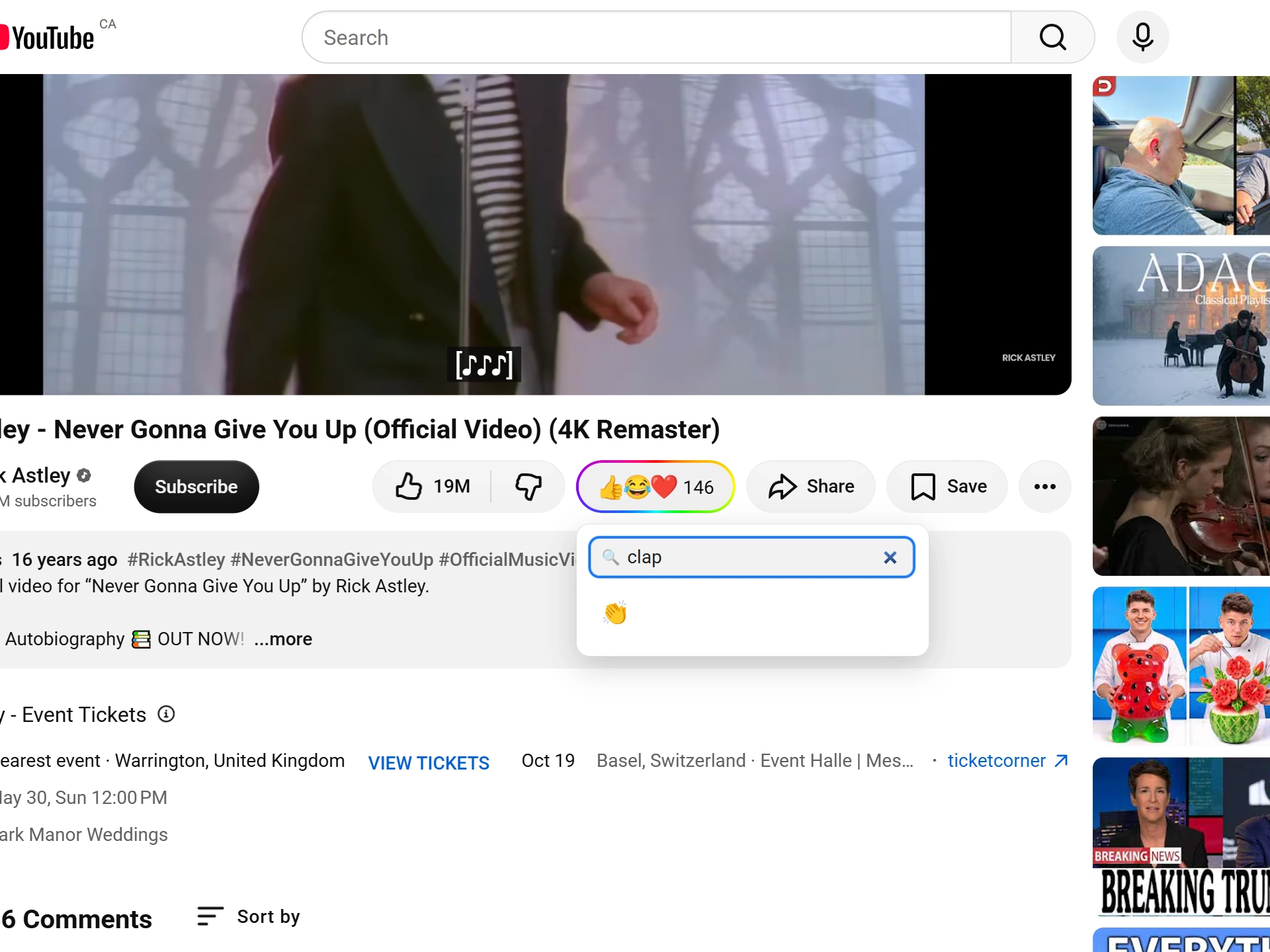
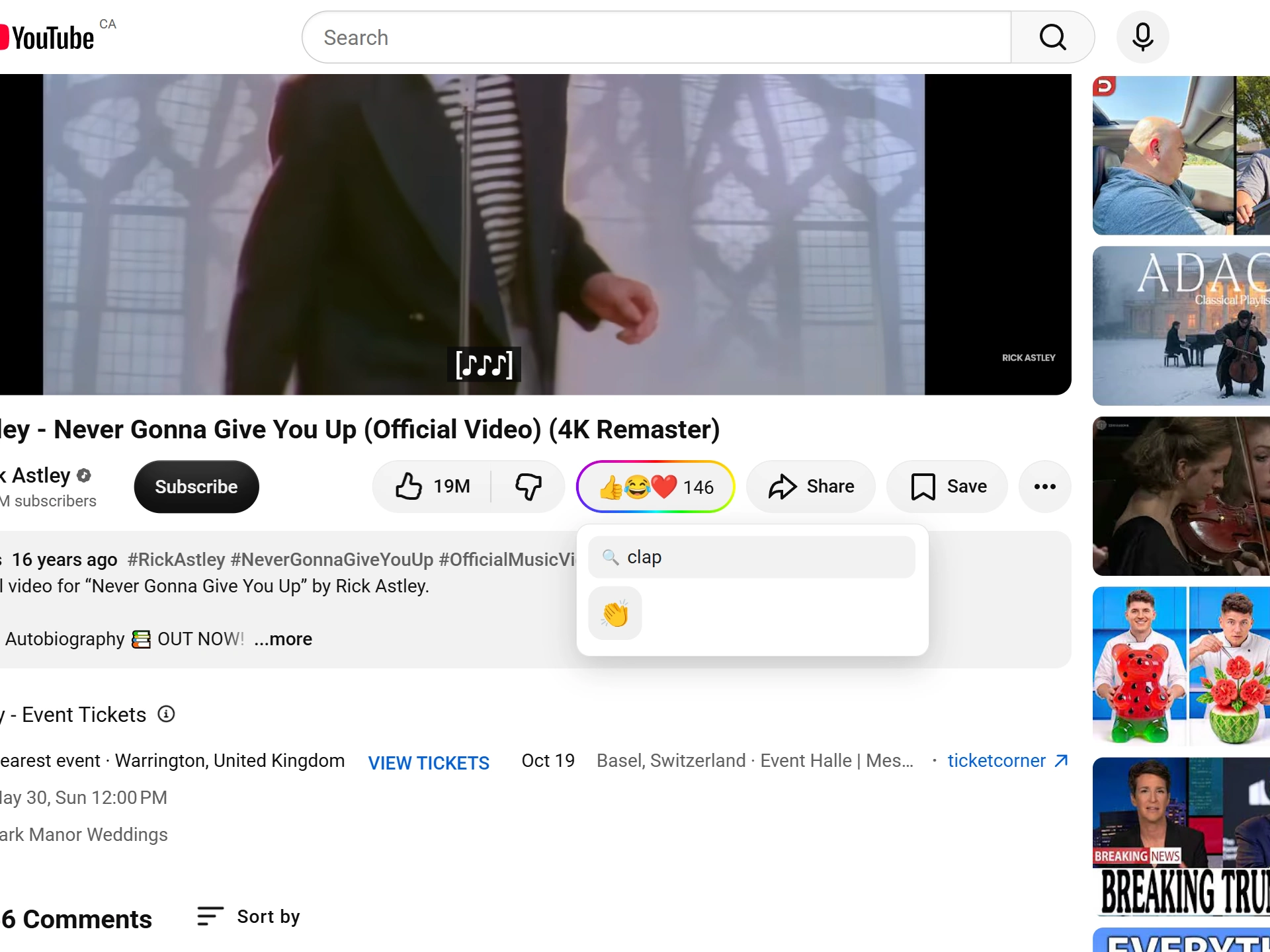
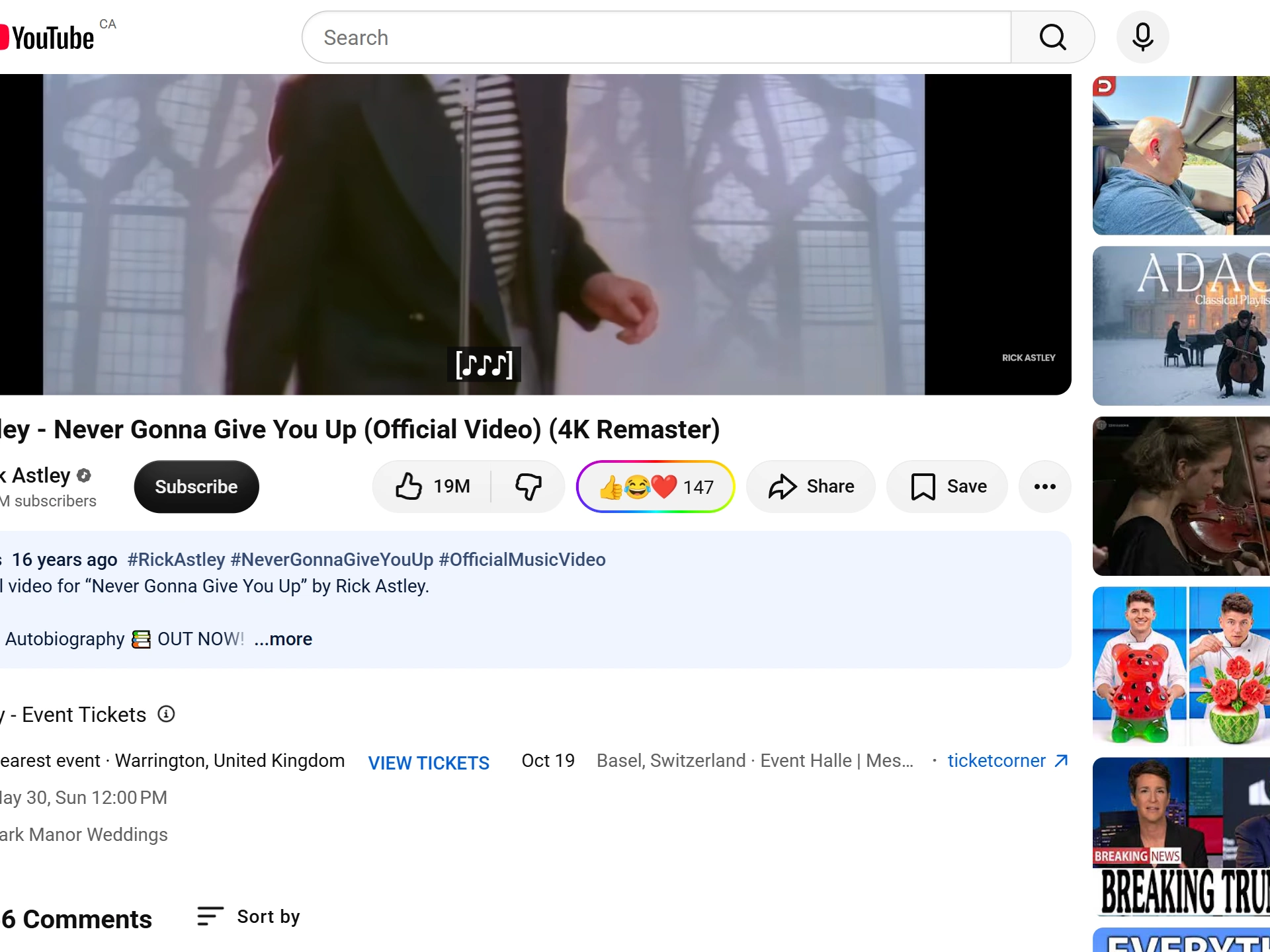
YouTube hid the public dislike total and left only Like as a visible signal. That makes it hard to tell whether a tutorial actually worked, whether a claim was disputed, or whether a video is quietly controversial. The gap is exactly where a richer reaction layer helps.
Emojery adds an independent, counted layer. It does not read or restore YouTube's own hidden number; it counts the emoji people pick in the extension, and a thumbs down is one of them.
The YouTube adapter targets a video's canonical watch URL. A Short converges to that same watch target, so a reaction belongs to the video itself rather than to a playlist position, an autoplay index, or a recommendation slot. Open the same video later and the same Emojery count is there.
Emojery sits beside Like and Share. The trigger opens the searchable palette, where 👎 is one entry among hundreds, no more privileged than 🔥 or 🤔. Type thumbs down and it is the first thing you see; type fire, skull, or thinking and you get the rest of what a Like was never going to carry.
The reaction total comes from Emojery rather than from YouTube. Anyone can read counts without signing in, while submitting one takes one provider sign-in, and the counting model is documented on the counts page. For how this differs from browser tools that try to estimate YouTube's own removed number, see the detailed comparison.
That difference is worth checking against every tool in this space, because the trade is rarely just accuracy. YouTube Dislikes Democratized, for instance, declares on its own store card that it collects personally identifiable information and web history — a heavy price for a number nobody can audit afterwards.
The trigger is placed in the Shorts action rail as well as the regular player, so the reaction is one tap away on either surface, and because both resolve to the same watch target, a Short and its full-page version share one total. What that reads like from the other side of the camera is on the creators page.
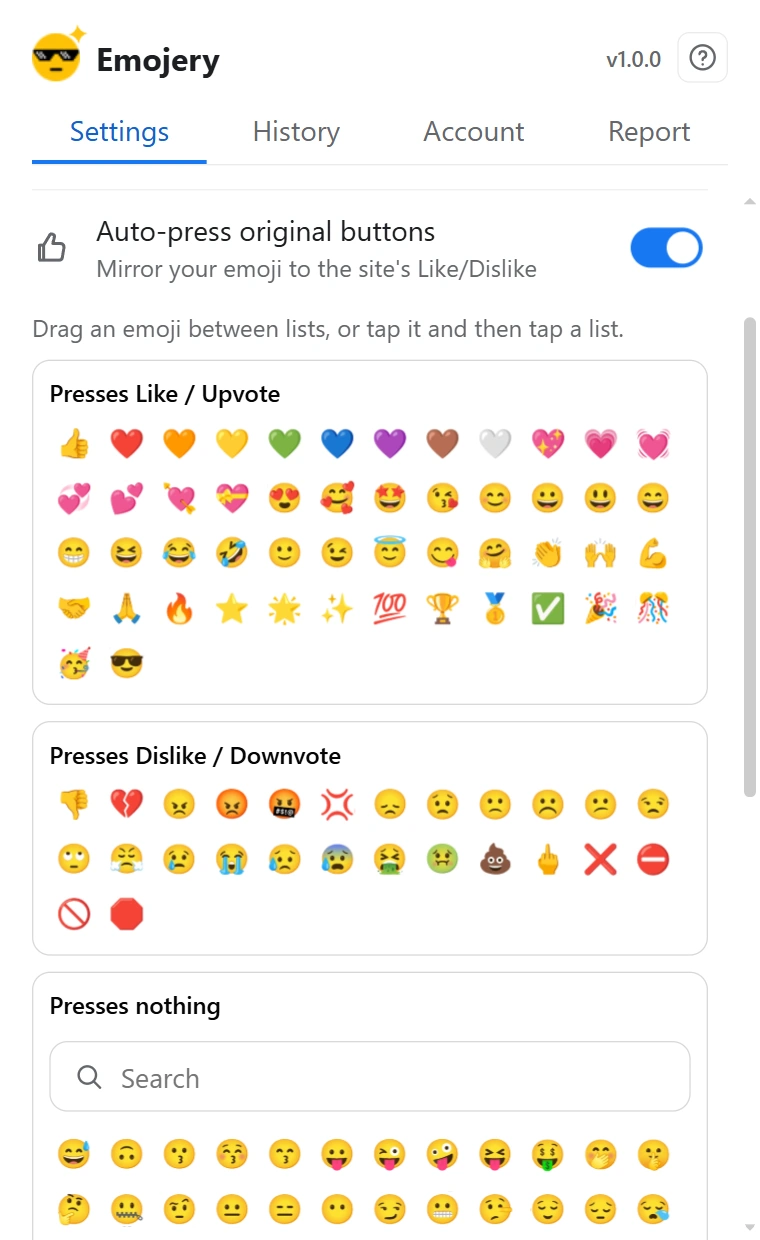
The off-by-default Auto-press original buttons setting mirrors your pick to YouTube's own buttons: a positive emoji presses Like, a negative one presses Dislike, the same actions as clicking them yourself. Switching your emoji switches the button (YouTube releases the opposite side on its own), and un-reacting releases only a press the extension made.
Which emoji count as positive or negative is up to you: the popup has 3 drag-and-drop lists, and anything left neutral presses nothing.
Pressing those buttons faster is all a hotkey wrapper such as YouTube Like-Dislike Shortcut does. Auto-press is the same convenience as a by-product; the reaction it starts from is the part YouTube has no button for.
The reaction layer is independent of YouTube: by default it never presses Like, so your reaction is never fed back as a YouTube signal. It is keyed to the video's canonical watch URL and stored by Emojery and never against your Google account. Reading counts needs no login, and only the aggregate is public, never a list of who reacted.
Read the full privacy policy.
Install Emojery, open a YouTube video or Short, and use emoji, including a counted thumbs down, when Like alone isn't enough.
No — YouTube's own total stays hidden. What Emojery publishes is a separate signal of its own, in which a thumbs down is one emoji among the full palette.
Yes. Shorts converge to the same canonical watch target as the standard video, so a reaction on a Short attaches to that video and shares its count.
Yes. Install Emojery and the picker appears beside Like on videos and Shorts alike — hundreds of emoji, filtered by typing the word you mean.
The same emoji reaction layer — one account, across every supported site.