
Say what the score cannot
A film can be well made and still leave people bored, furious, moved, or laughing at it. Hearts, fire, thinking faces, and warnings separate those from a single percentage.
A film can be well made and still leave people bored, furious, moved, or laughing at it. Hearts, fire, thinking faces, and warnings separate those from a single percentage.
Leave a fast public signal when writing an audience review is more than the moment deserves.
Seasons and episodes carry their own scores here, so their reaction strips are their own too.
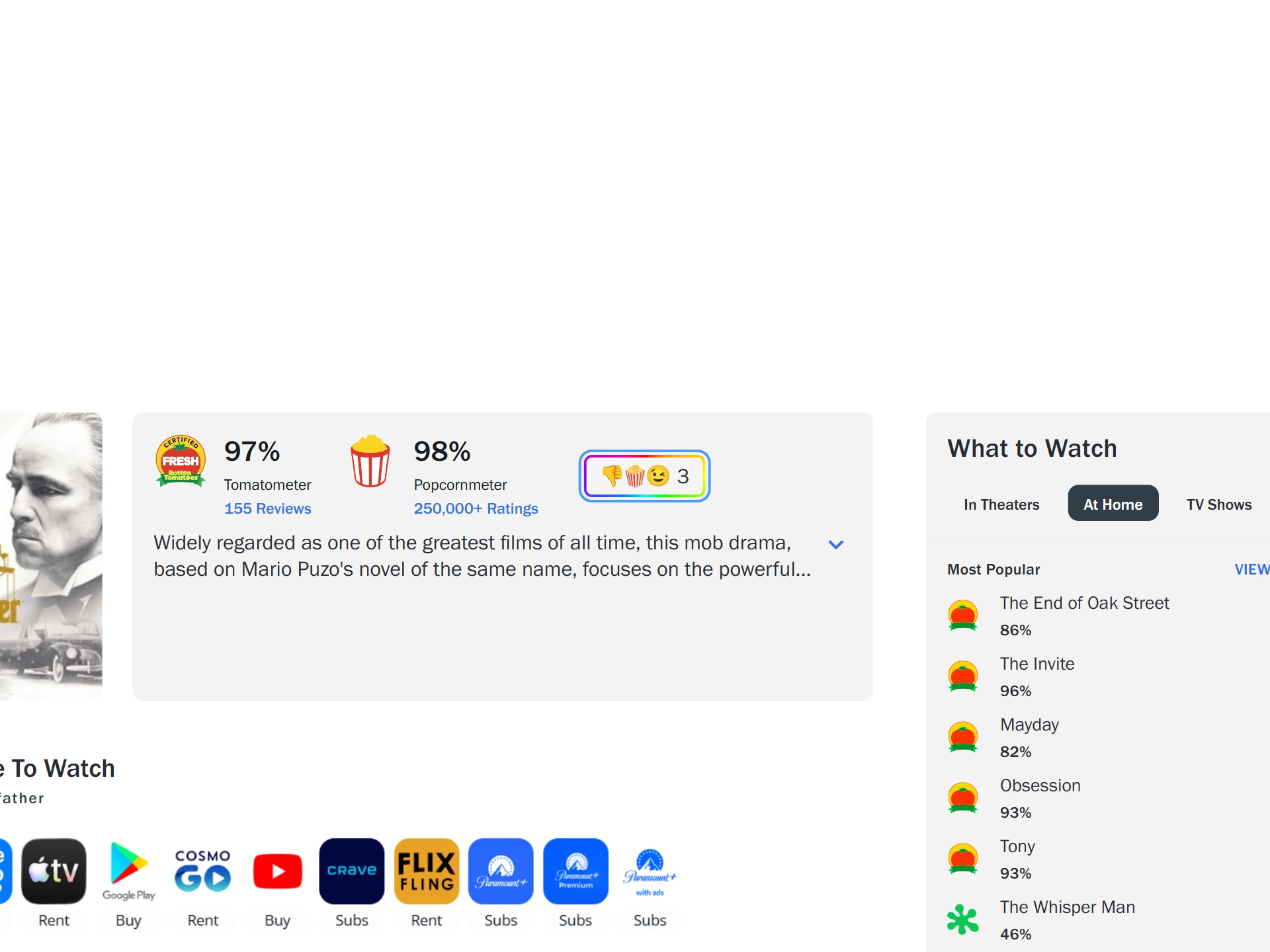
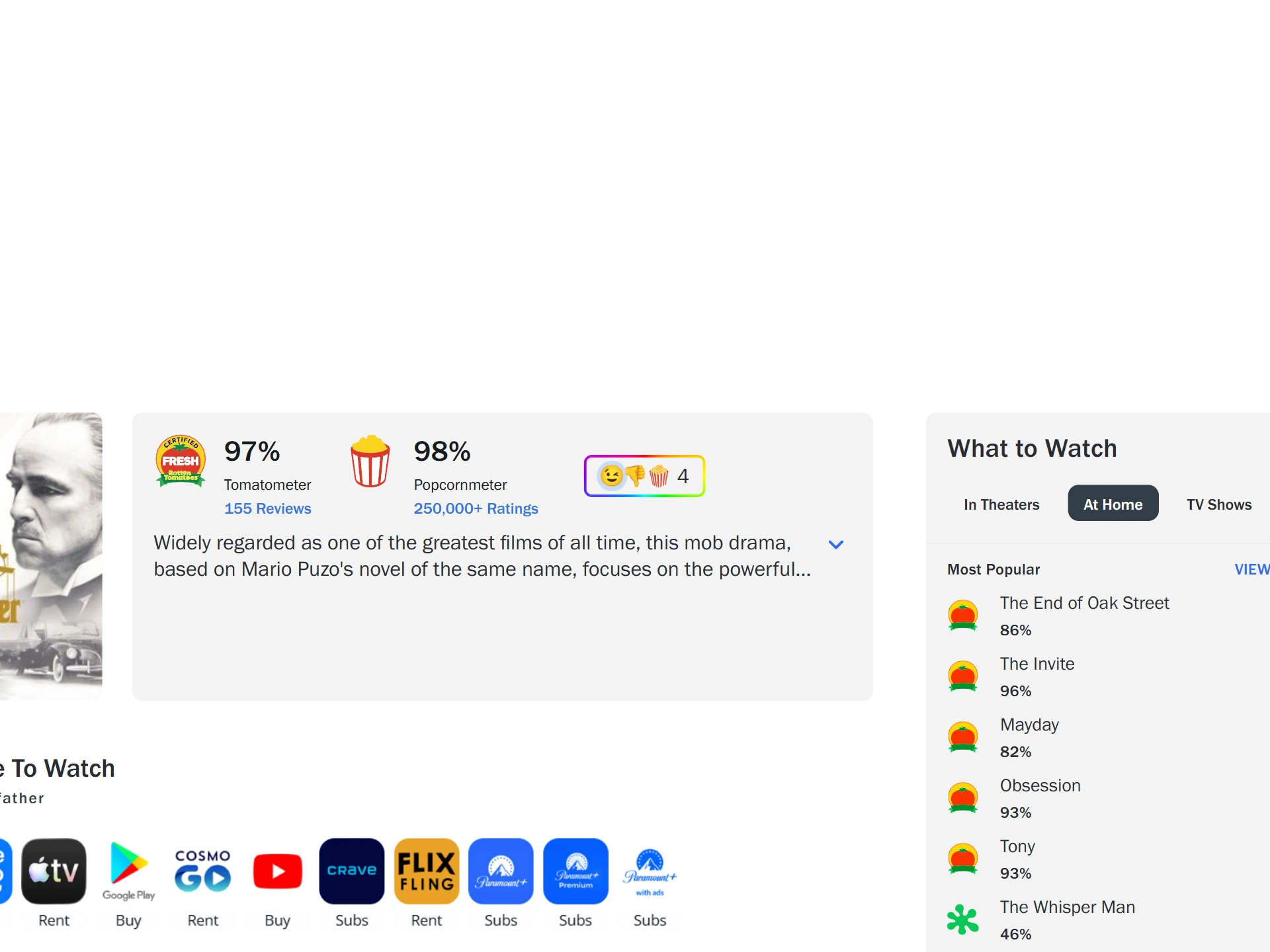
The Tomatometer counts the share of critics who were positive. The Popcornmeter counts the share of verified viewers who were. Both answer how many, and neither answers which feeling: a 60% can be built from warm affection or from shrugging indifference, and the number reads the same either way.
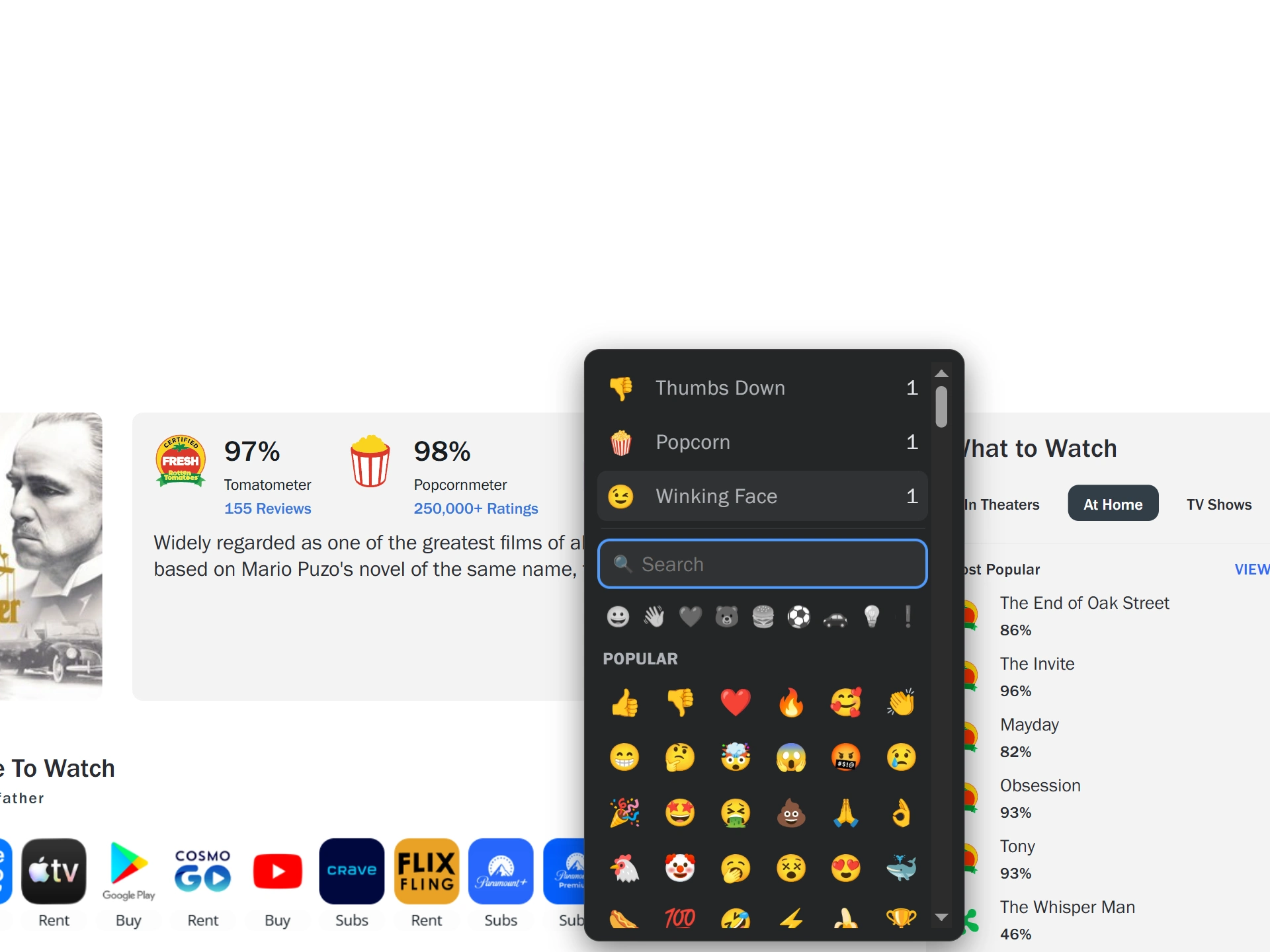
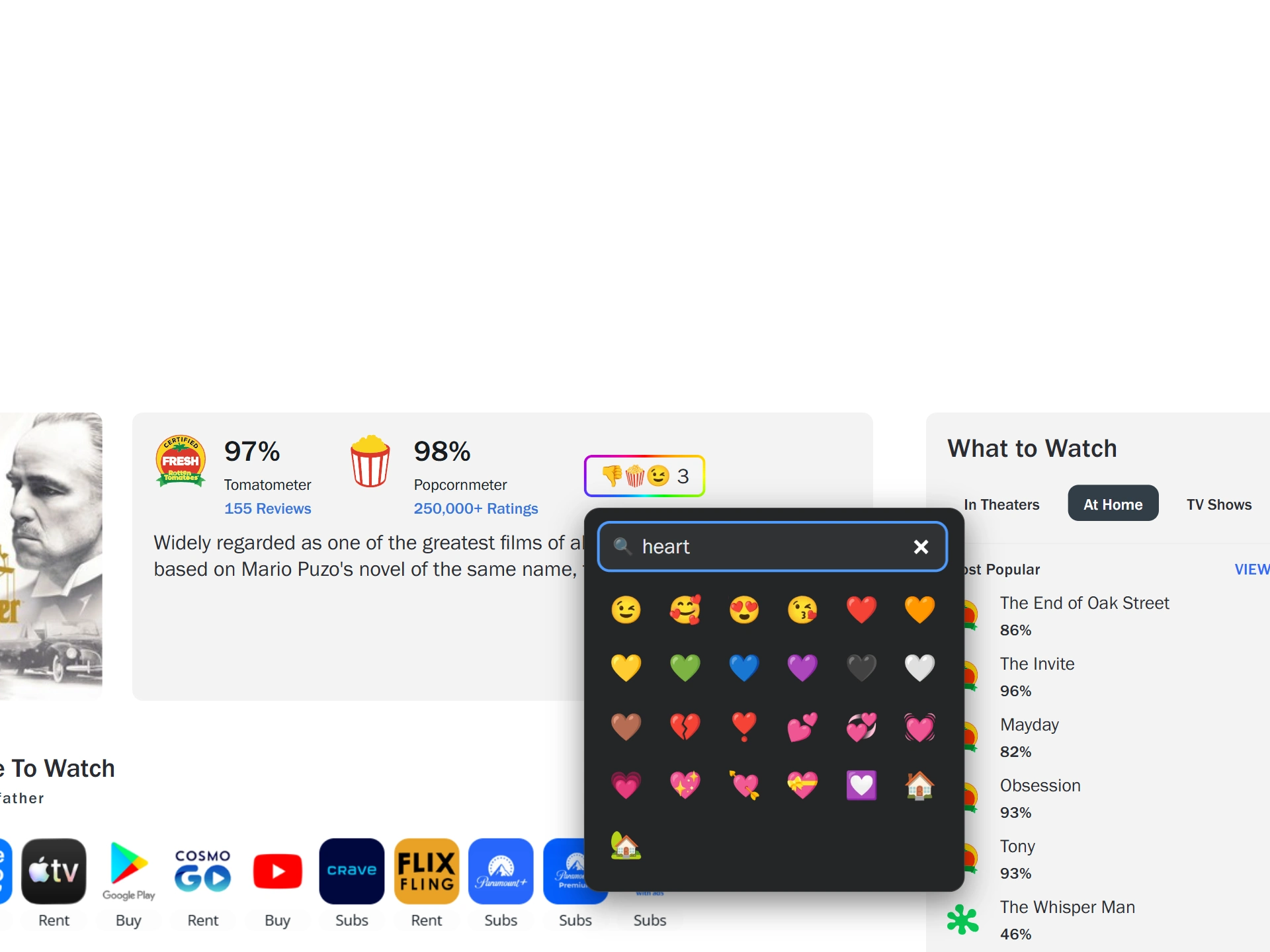
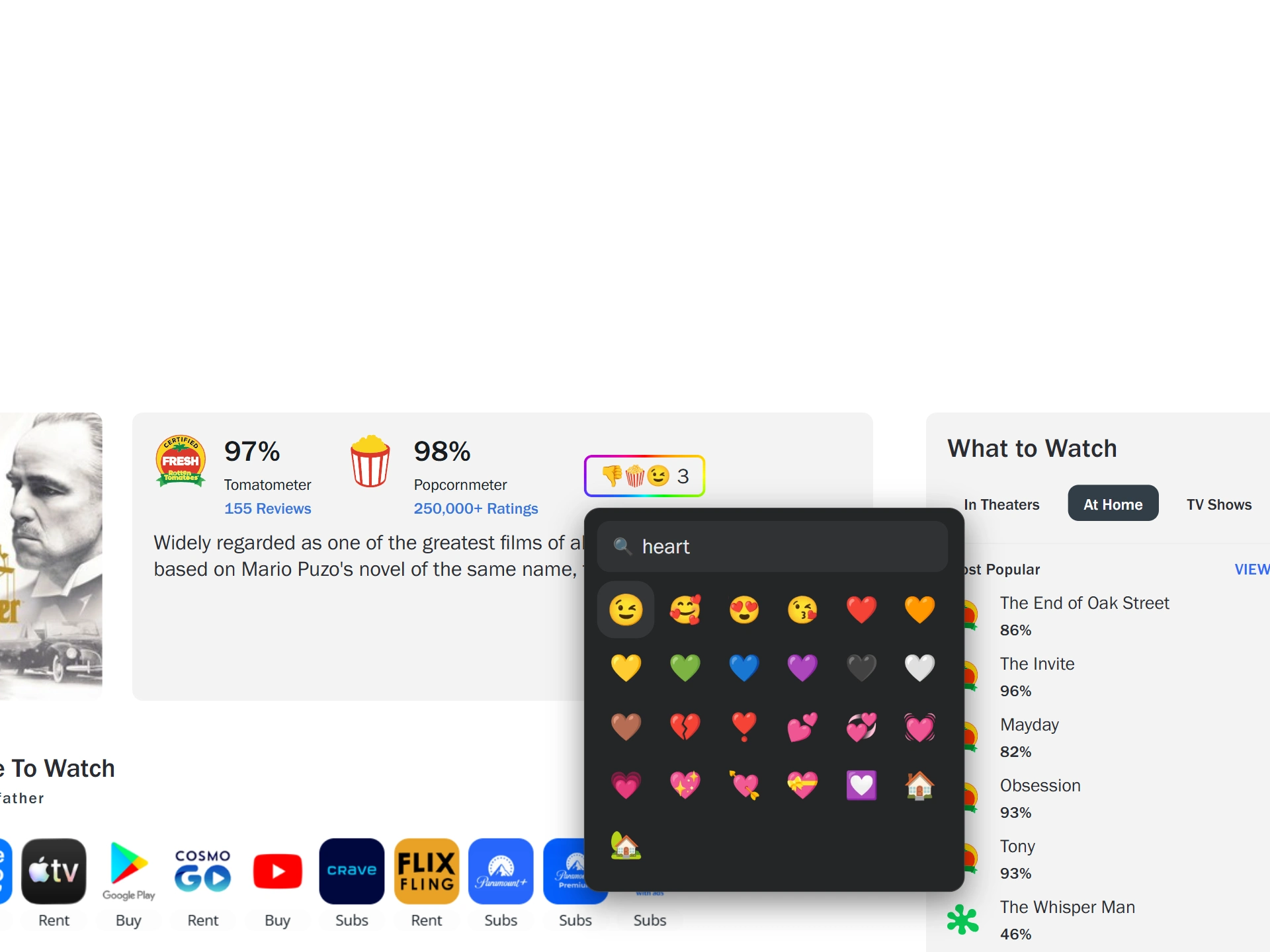
Emojery gives people a way to say which one it was without writing anything. The result is a public reaction strip drawn from the same emoji palette as every other supported site, so the vocabulary does not change when the page does.
Emojery does not compute a rating, rank films, weight critics, or touch either meter. It adds a separate reaction layer in your browser, beside the scores the site already publishes.
The extension derives the target from the page path, so a film, a series, one of its seasons, and one of its episodes are 4 distinct targets with 4 distinct totals. That mirrors how the site itself scores them: a season page carries its own Tomatometer, and so its reactions stay its own.
A link that arrives with a different capitalisation lands on the same target, because the site routes titles case-insensitively and the extension folds the id the same way.
Rotten Tomatoes has no per-title Like, vote, or reaction control, so Emojery only adds. The opt-in Auto-press original buttons setting has no native control to press here, and Hide original buttons has nothing to hide, so both are simply inactive on these pages.
A title's totals are readable by anyone, with no Rotten Tomatoes or Emojery login. Adding to them takes a provider sign-in, so the strip counts people rather than anonymous installs.
A wall of hearts and fire reads differently from a mix of thinking faces, sleeping faces, and warnings, even when both films sit at the same percentage. Look at which emoji leads, and at whether the second one agrees with it or argues with it.
The reaction layer belongs to neither the critics nor the site. It uses Emojery's own interface and counting model, the same one running on repositories, videos, and social posts, so the signal reads the same way wherever you meet it.
Emojery never sees your Rotten Tomatoes account or watch history: it asks for the counts of the titles on screen by their public page paths and stores none of that, and a reaction is keyed only to the title, never to your session. The public output is the aggregate emoji count for that title: no list of who reacted, and nothing tied back to a viewer.
Read the full privacy policy.
Install Emojery, open a film, show, season, or episode page, and read the emoji layer beside the 2 meters.
No. It does not edit either meter, the critic reviews, or the audience score. It adds a separate reaction layer in your browser.
Film pages, TV show pages, season pages, and episode pages — each with its own reaction total. Review, cast, and browse pages have no score card and no button.
No. Nobody gets a list of who reacted — the public layer is the aggregate count for the title.
The same emoji reaction layer — one account, across every supported site.