
Use the same vocabulary everywhere
TMDB offers a short list of its own reactions. Emojery brings the full palette, and the same one you use on every other supported site.
TMDB offers a short list of its own reactions. Emojery brings the full palette, and the same one you use on every other supported site.
A film series has its own page here, so the reaction can belong to the whole run rather than to one entry in it.
Leave a public signal when a number would be the wrong shape for what you thought.
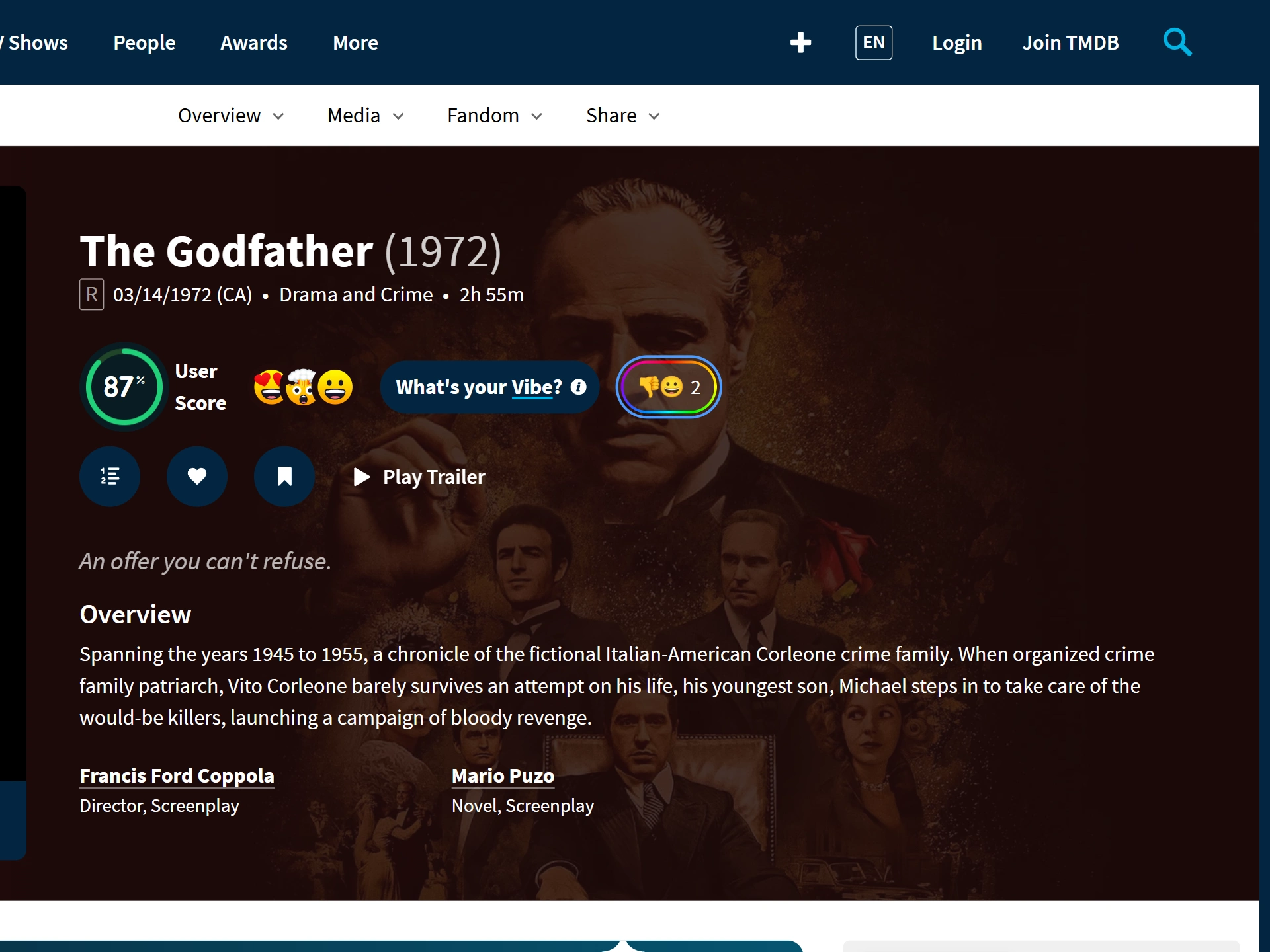
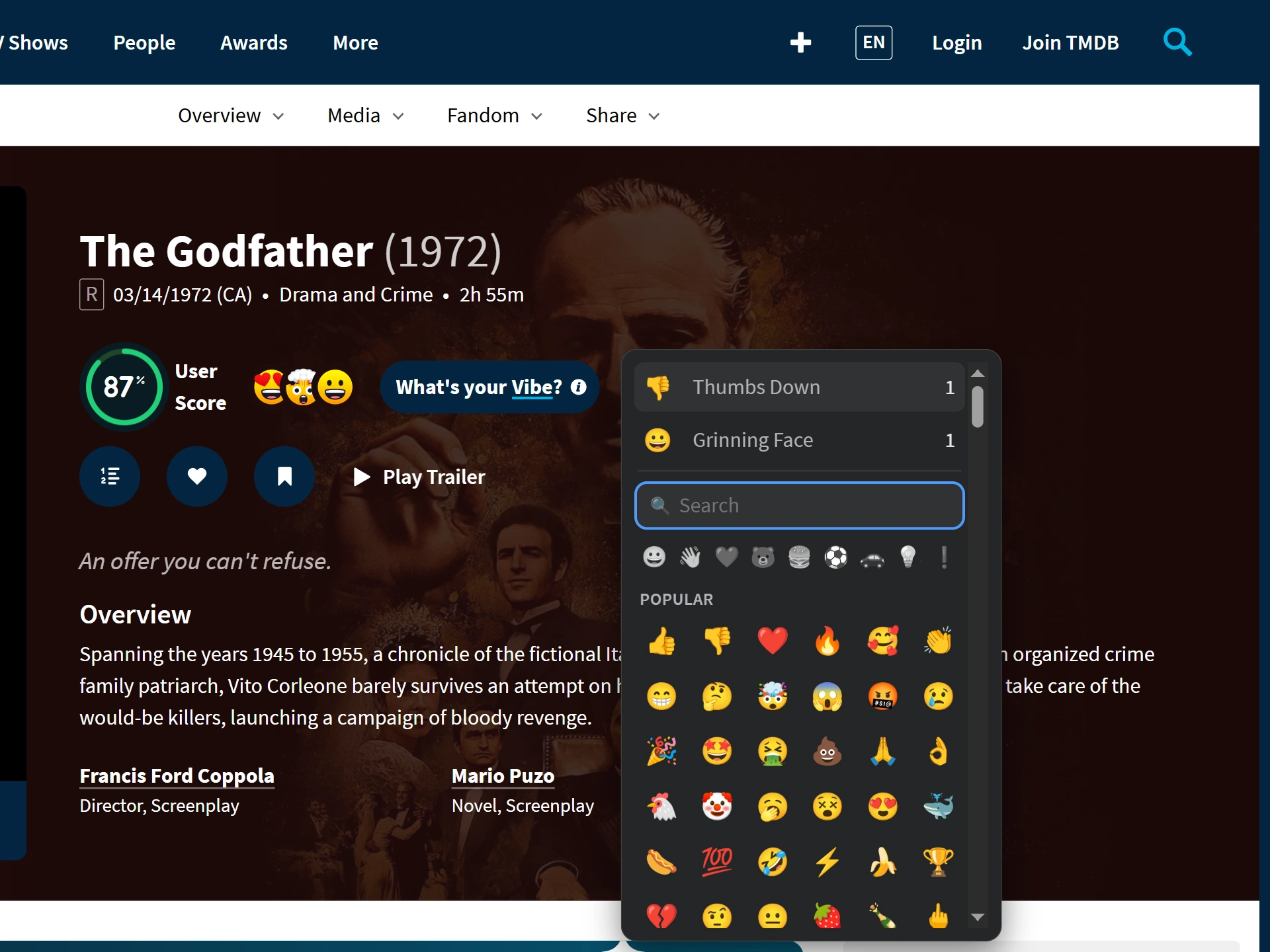
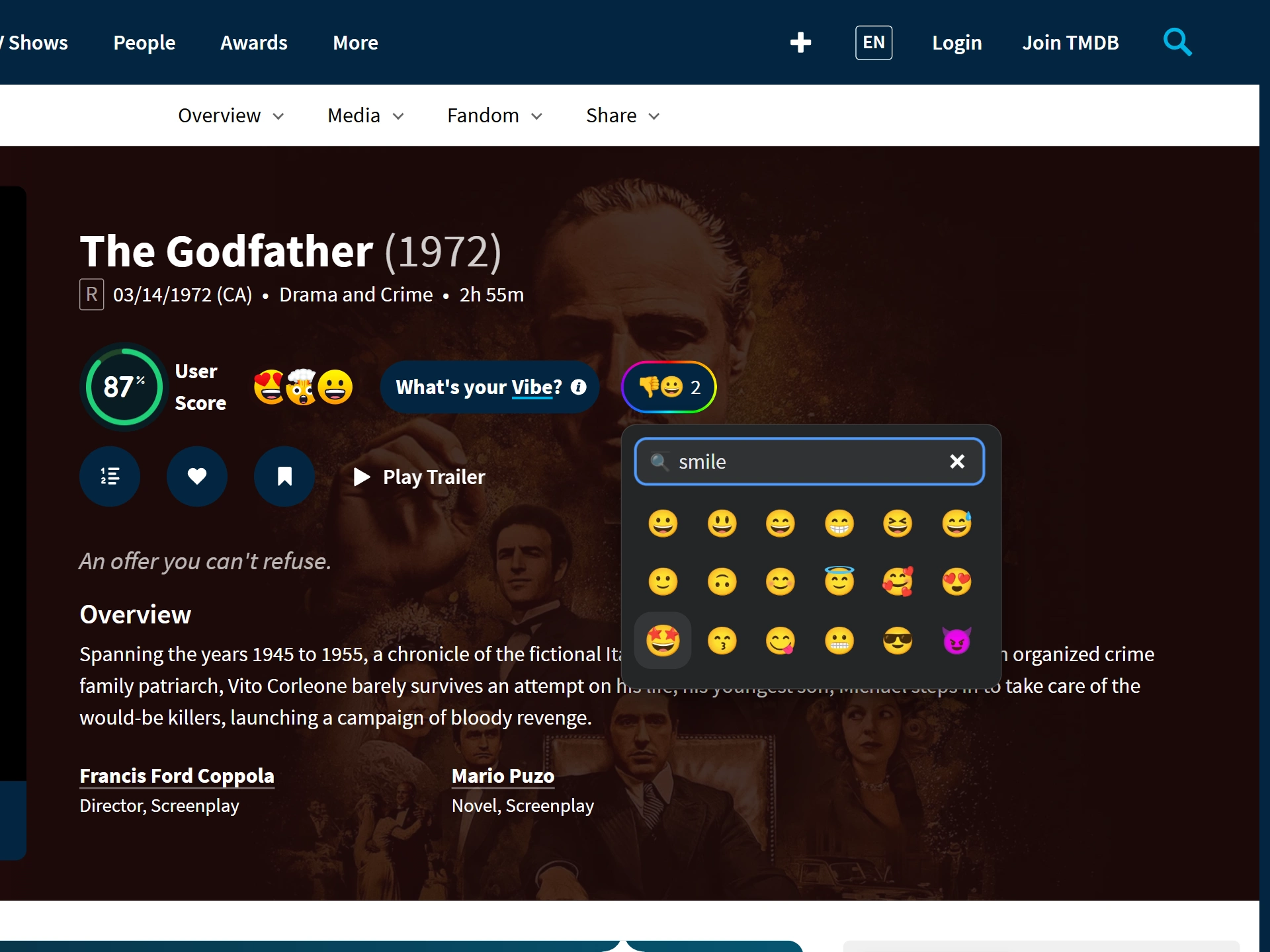
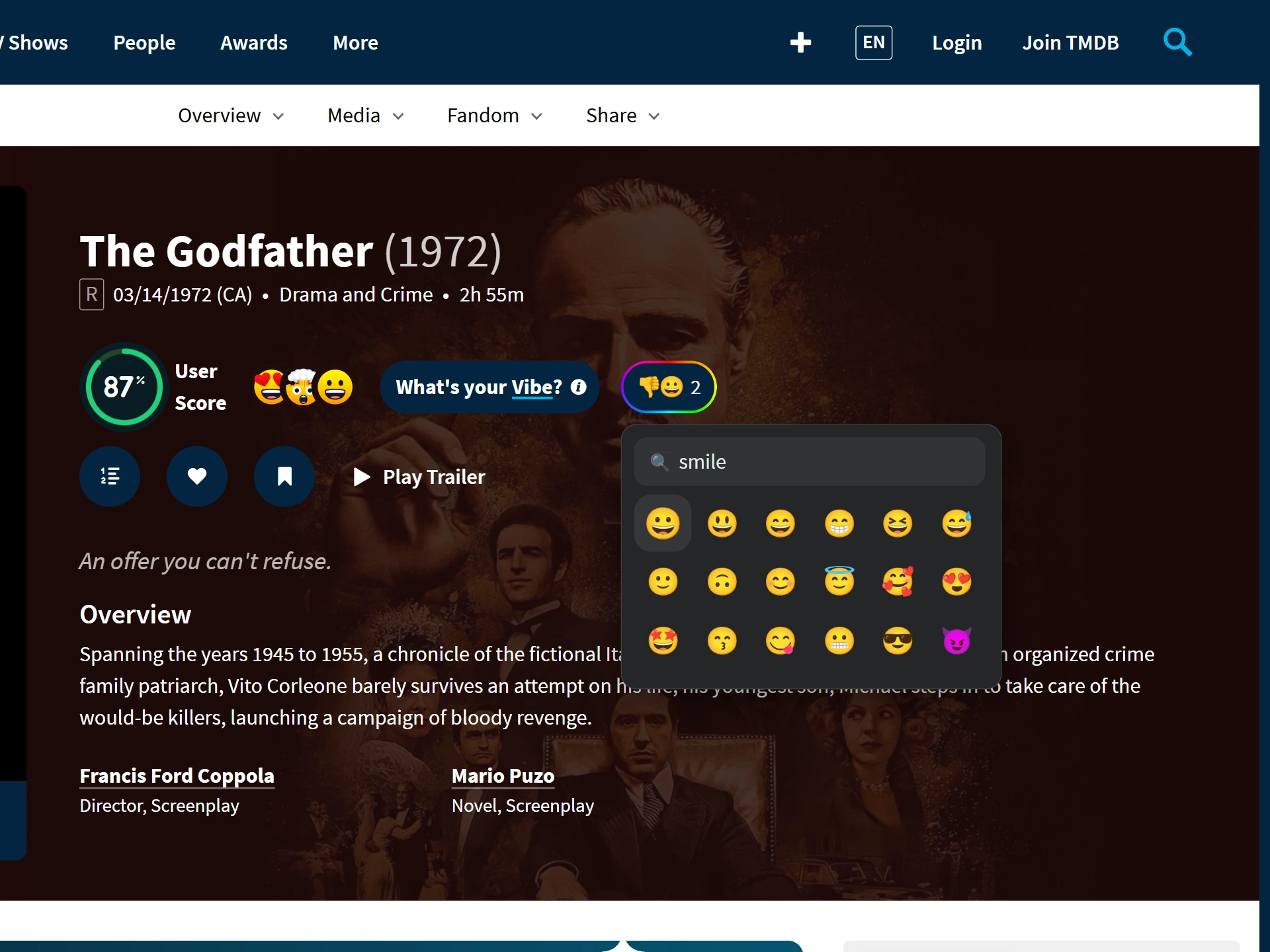
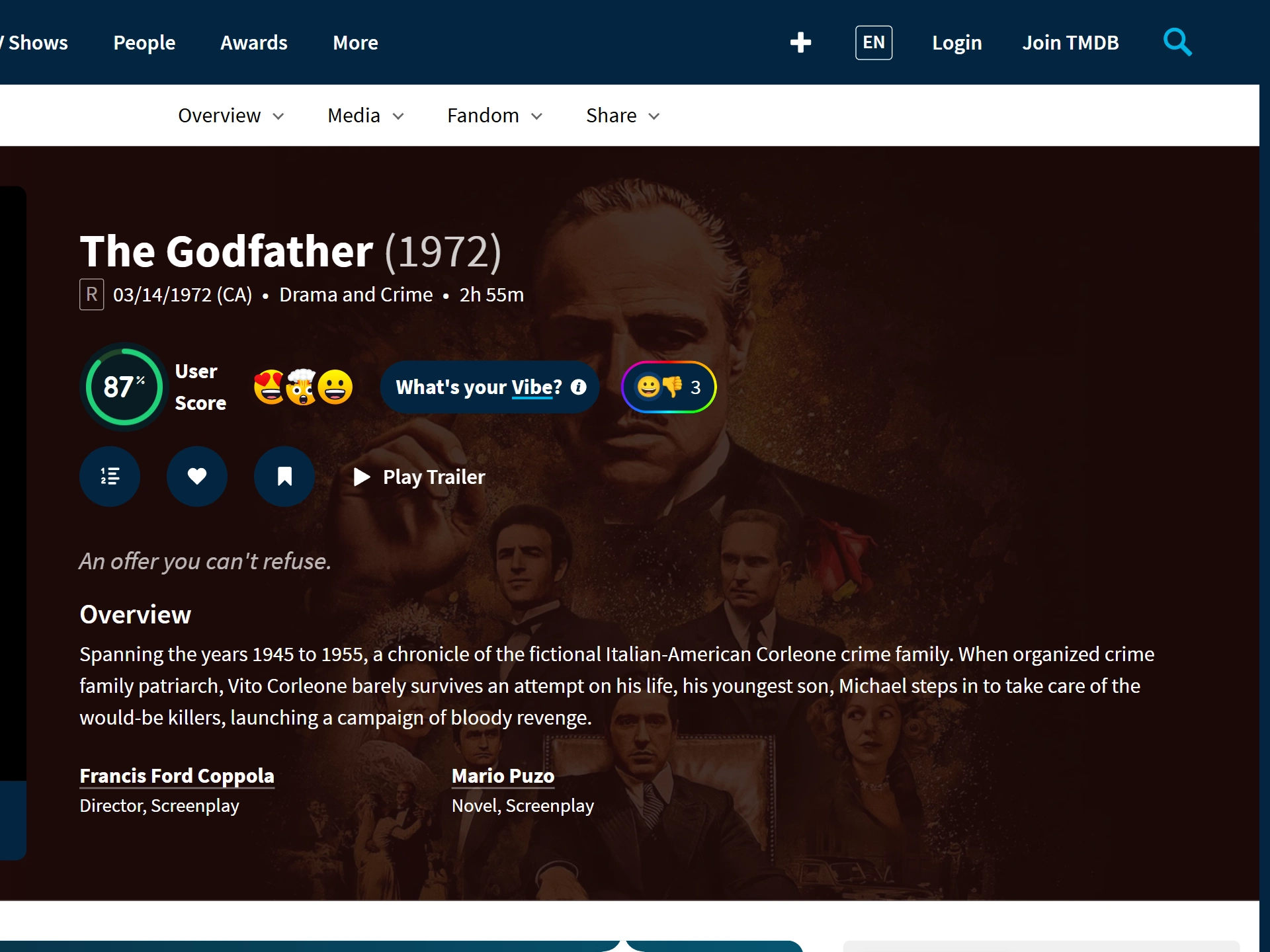
TMDB ships a small set of its own emoji reactions beside the user score. They work, and they stop there: a different vocabulary on every site means nothing carries over when you move from a film page to a video, a post, or a repository.
Emojery is the same layer on all of them, drawn from one palette and one counting model. That is the difference it is for, rather than a richer version of what the page already does.
Because the 2 layers say the same kind of thing, TMDB is 1 of the few places where the optional Hide original buttons setting has something to hide: turning it on removes the site's own reaction strip and its rating prompt, leaving the Emojery button in their place. The percentage itself is a score rather than a reaction, so it stays either way. The setting is off by default and reversible.
The extension derives the target from the numeric id in the page URL, so a movie, a series, and a collection are 3 distinct targets. The slug after that id is decoration the site rewrites on its own, and it never reaches the count.
Season and episode pages carry no score row, so they carry no button. The series page is where a show's reactions gather.
TMDB serves its pages in many languages from the same id. A reaction left on the English page and one left on the Russian page land on the same total, because the language never enters the target.
A title's totals are readable by anyone, with no TMDB or Emojery login. Adding to them takes a provider sign-in, so the strip counts people rather than anonymous installs.
A short reaction list forces every feeling into the nearest approved box. An open palette lets a film be unsettling, overrated, comforting, or funny in the way it actually was, and lets the strip show when those disagree with each other.
The reaction layer belongs to neither the site nor its contributors. It runs on the same model on every supported page, so the signal reads the same way wherever you meet it.
Emojery never sees your TMDB account, lists, or watchlist: it asks for the counts of the titles on screen by their public ids and stores none of that, and a reaction is keyed only to the title, never to your session. The public output is the aggregate emoji count for that title: no list of who reacted, and nothing tied back to a viewer.
Read the full privacy policy.
Install Emojery, open a TMDB movie, series, or collection page, and react with the full palette.
Only if you ask it to. The optional Hide original buttons setting removes the site's reaction strip and rating prompt; left off, both layers sit side by side.
Movie, TV series, and collection pages — each with its own reaction total. Season and episode pages have no score row and no button.
No. The target comes from the numeric id, so every language of the same title shares one total.
No. Nobody gets a list of who reacted — the public layer is the aggregate count for the title.
The same emoji reaction layer — one account, across every supported site.