
Show the reaction behind the split
When the Metascore and the User Score disagree, emoji say which feeling is driving the gap instead of leaving it as 2 numbers.
When the Metascore and the User Score disagree, emoji say which feeling is driving the gap instead of leaving it as 2 numbers.
The same strip and the same palette work on a game page and on a film page, so the vocabulary never changes.
Leave a public signal when a number and a written review are both more than the moment needs.
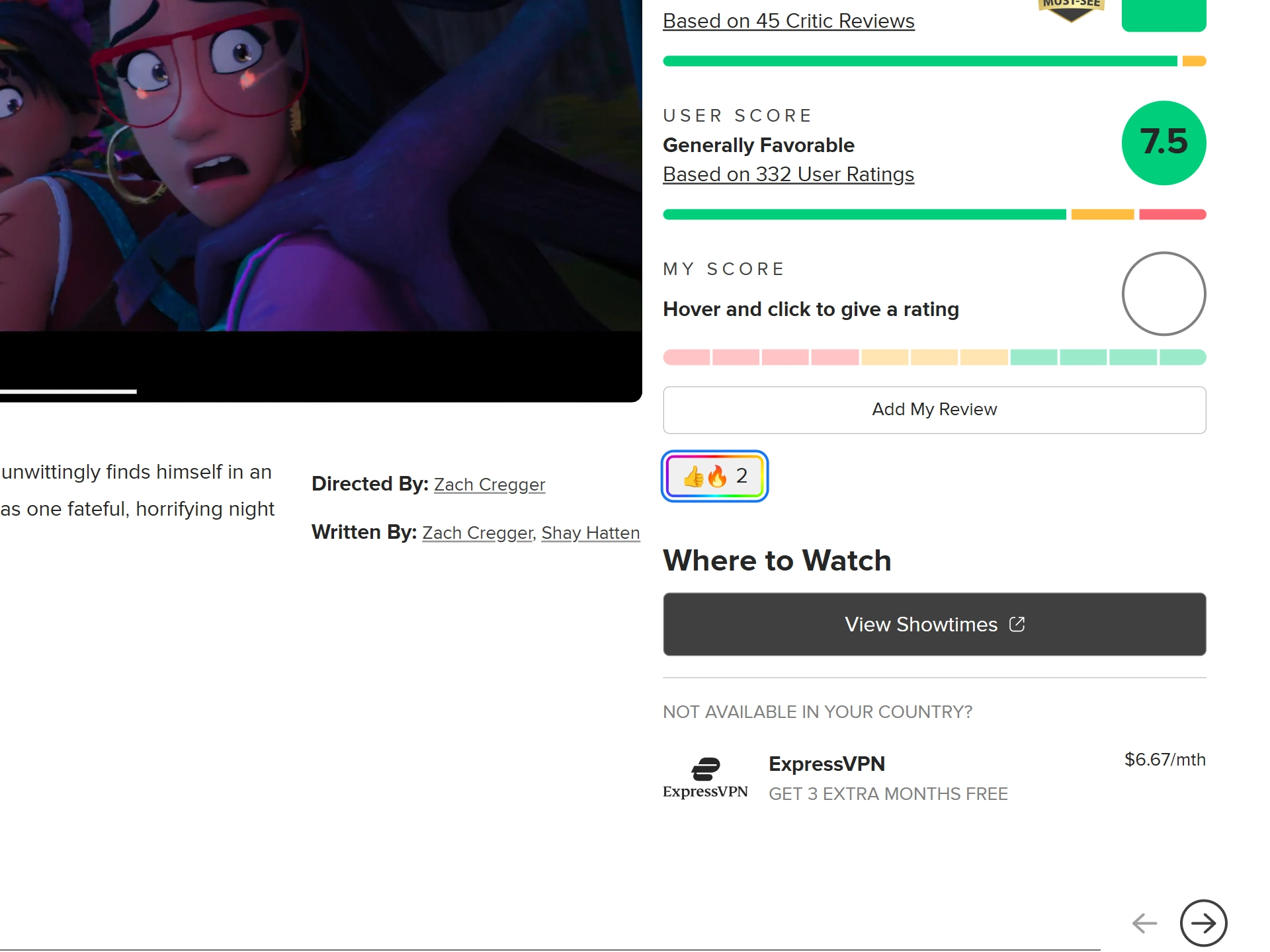
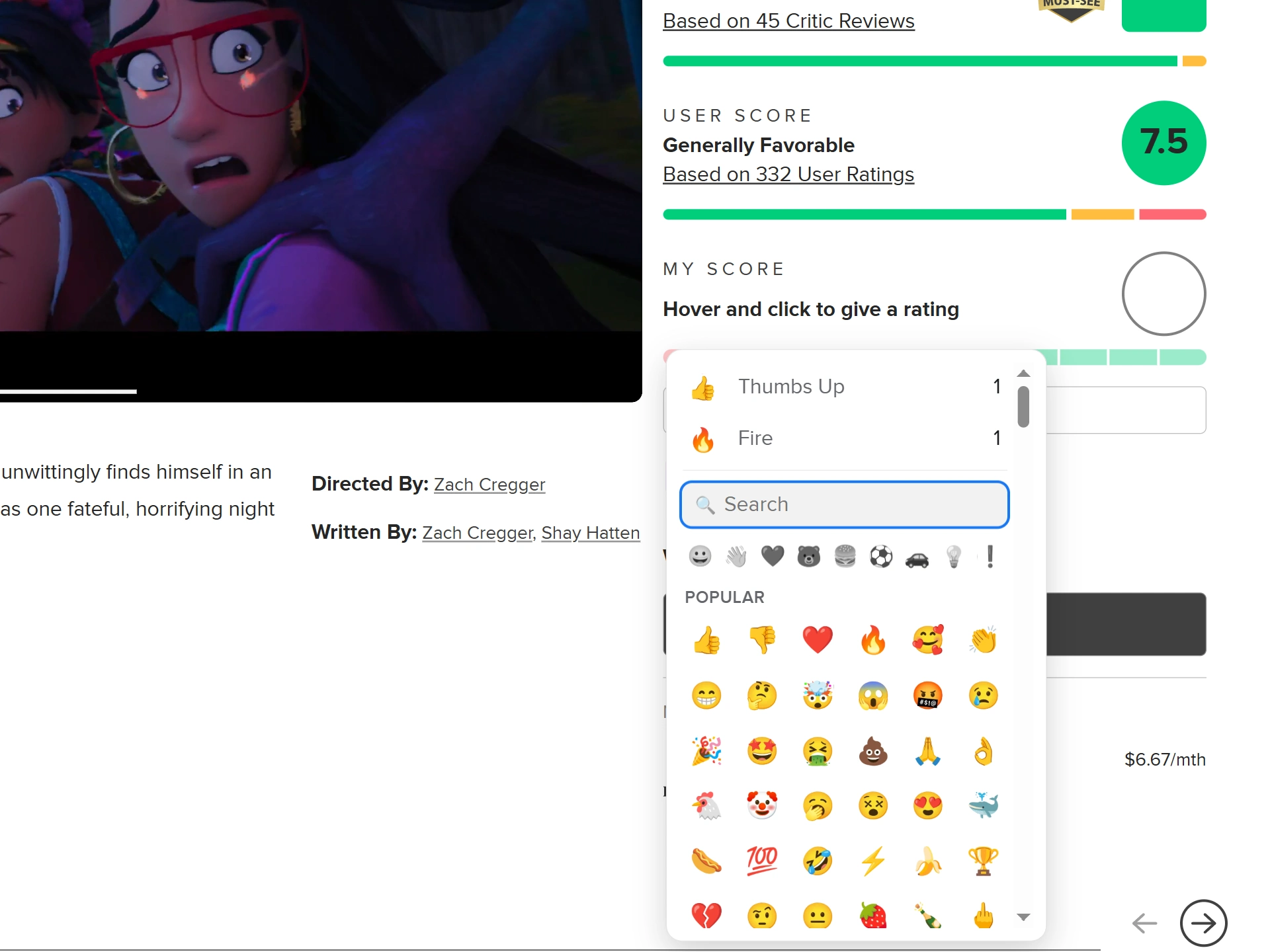
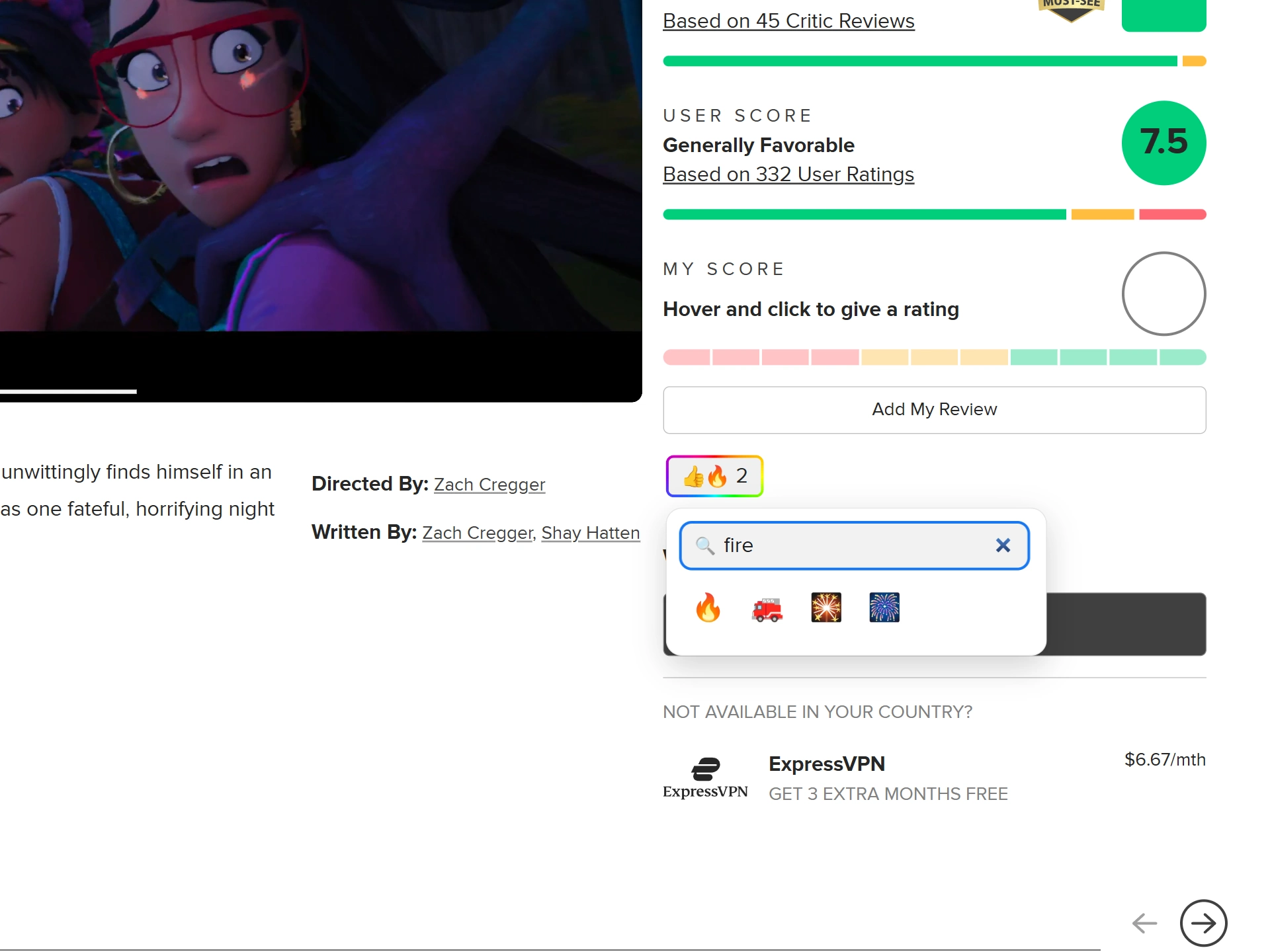
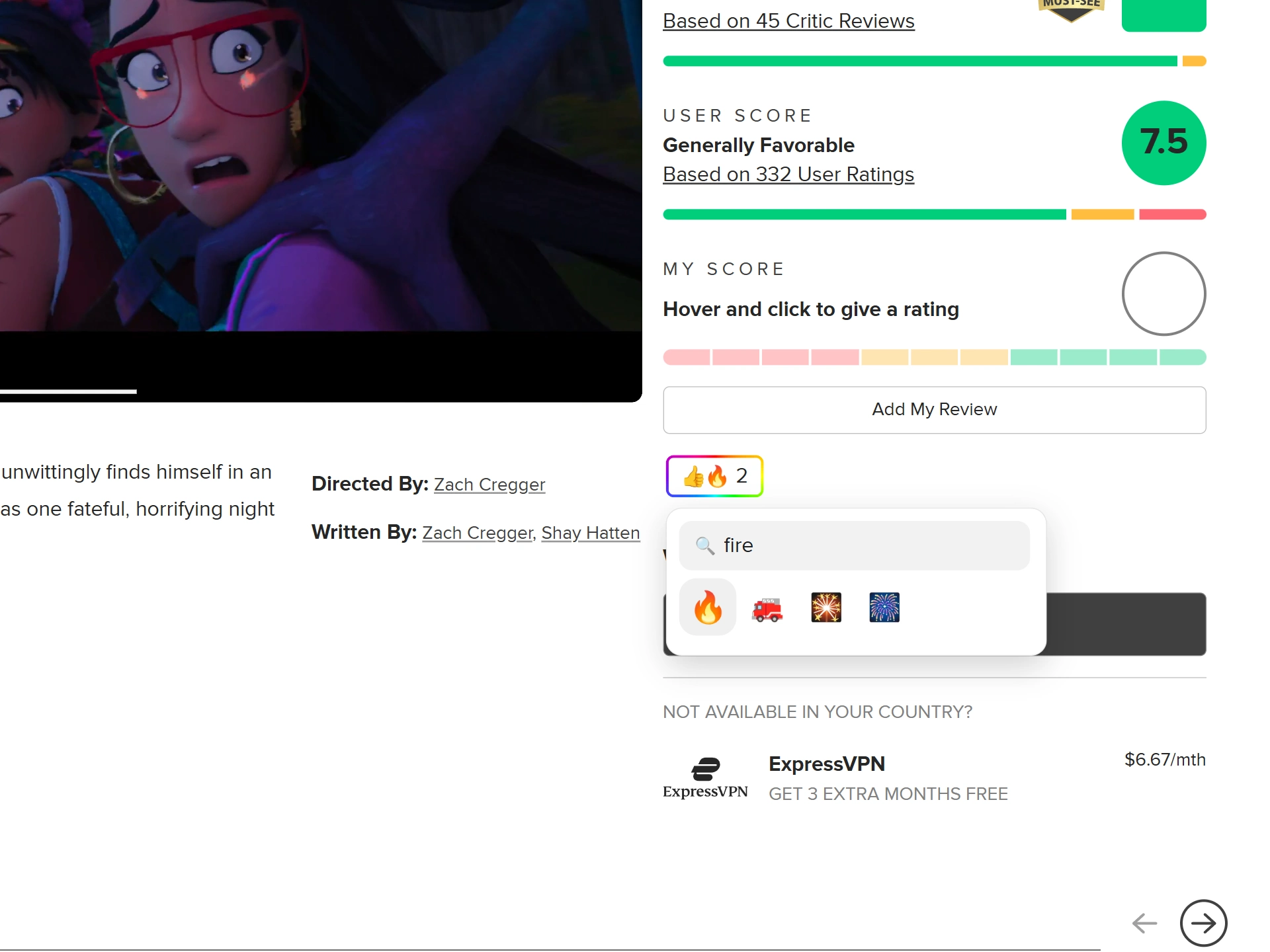
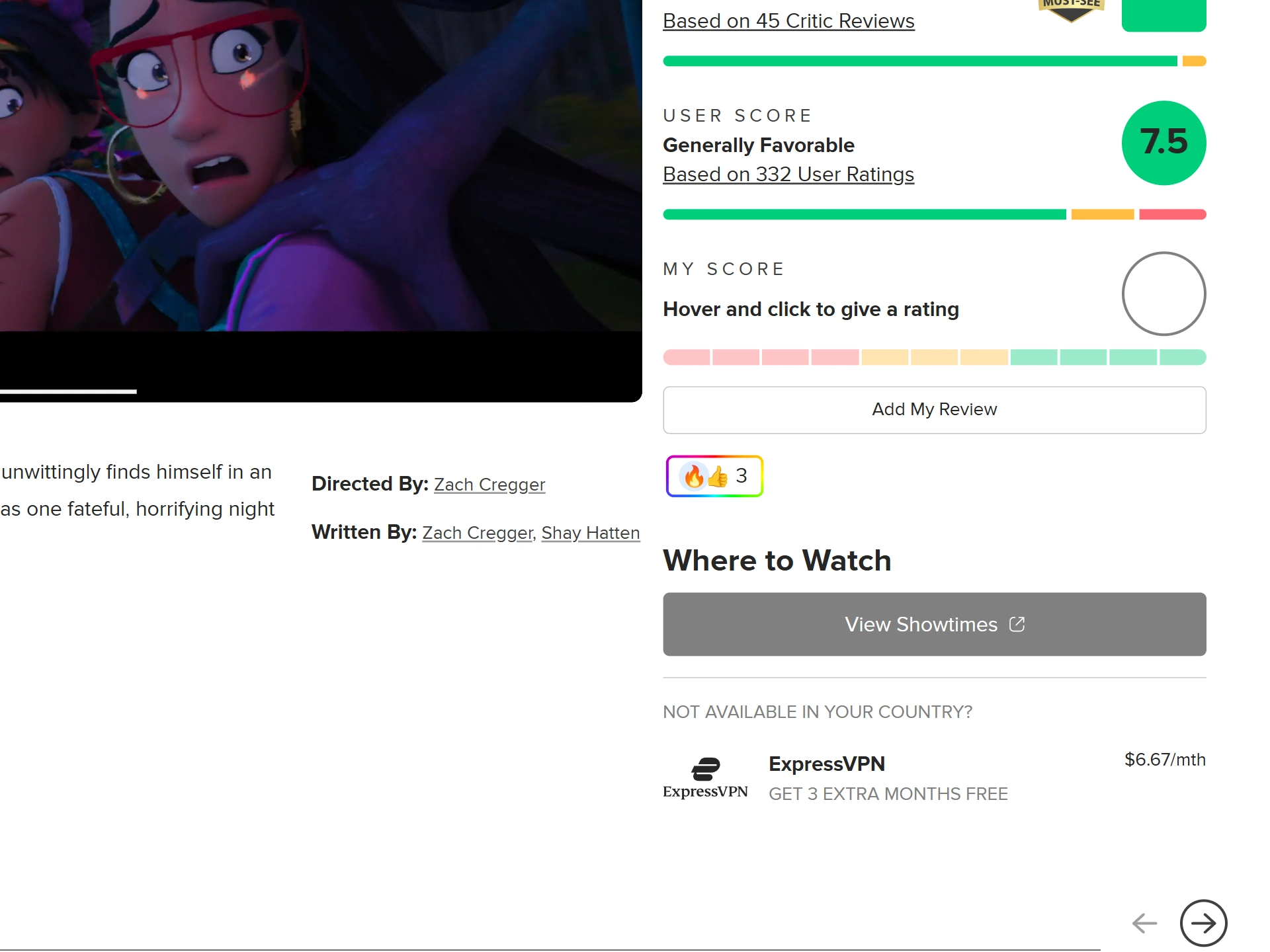
The Metascore weights professional reviews. The User Score counts everyone else. When they land far apart, the page shows the distance and nothing about what caused it: a genuine split in taste reads exactly like a brigading campaign.
Emojery adds a third thing that is not a number at all. A reaction strip drawn from one palette shows which feelings are actually gathering, and whether they agree with each other.
Emojery does not compute a rating, detect review bombing, weight anyone's vote, or touch either score. It adds a separate reaction layer in your browser, under the scores the site already publishes.
The extension derives the target from the page path, so a film, a show, one of its seasons, and a game are 4 distinct targets with 4 distinct totals. That mirrors how the site scores them: a season page carries its own Metascore, and so its reactions stay its own.
A game keeps 1 page whichever platform you play it on, so its reactions gather in 1 place rather than splitting across console listings.
The My Score control is a rating slider and a review form rather than a reaction, so Emojery stands in for nothing: the opt-in Auto-press original buttons setting stays inactive here, and Hide original buttons has nothing to hide.
A title's totals are readable by anyone, with no Metacritic or Emojery login. Adding to them takes a provider sign-in, so the strip counts people rather than anonymous installs.
A user score far under the critic score can mean disappointment, anger, boredom, or a joke that got out of hand. Those look different in emoji and identical as a number, which is the whole reason to read both.
The reaction layer belongs to neither the critics nor the site. It uses Emojery's own counting model, the same one running on repositories, videos, and social posts.
Emojery never sees your Metacritic account, ratings, or reviews: it asks for the counts of the titles on screen by their public page paths and stores none of that, and a reaction is keyed only to the title, never to your session. The public output is the aggregate emoji count for that title: no list of who reacted, and nothing tied back to a reader.
Read the full privacy policy.
Install Emojery, open a Metacritic film, show, season, or game page, and read the emoji layer under the scores.
No. It does not edit either score, the critic reviews, or the user reviews. It adds a separate reaction layer in your browser.
Film, TV show, season, and game pages — each with its own reaction total. Music pages, review pages, and browse pages have no score column and no button.
No. The site keeps 1 page per game, so its reactions gather there whichever platform you play on.
No. Emojery does not police either score. It gives people a different way to say what they felt, which is often easier to read than a number under attack.
The same emoji reaction layer — one account, across every supported site.